Steps to Commercial Light Fitting Services Installation

When it comes to upgrading or installing lighting in commercial spaces, the process can seem a bit daunting at first. But with the right approach, it becomes straightforward and manageable. I’m here to walk you through the essential steps to ensure your commercial light fitting services go smoothly and deliver the best results. Whether you’re managing an office, retail store, or industrial site, understanding these steps will help you make informed decisions and get the lighting setup that suits your needs perfectly.
Understanding Commercial Light Fitting Services
Before diving into the installation process, it’s important to grasp what commercial light fitting services involve. Unlike residential lighting, commercial lighting needs to meet specific standards for brightness, energy efficiency, and durability. These services cover everything from selecting the right fixtures to ensuring compliance with safety regulations.
Commercial light fitting services typically include:
Assessment of lighting needs based on the type of business and space layout.
Selection of appropriate fixtures such as LED panels, downlights, or high bay lights.
Installation by qualified electricians who understand commercial wiring and safety codes.
Testing and adjustment to ensure optimal lighting levels and energy use.
Getting these services right means your space will be well-lit, safe, and energy-efficient, which can improve productivity and reduce costs.

Step 1: Planning and Assessment
The first step in any commercial lighting project is thorough planning. This involves assessing the space to understand the lighting requirements. Here’s what I recommend focusing on:
Evaluate the space size and layout: Larger areas or those with high ceilings may need more powerful or specialized lighting.
Identify the purpose of each area: For example, a warehouse needs bright, uniform lighting, while a retail store might benefit from accent lighting to highlight products.
Consider energy efficiency goals: LED lighting is often the best choice for commercial spaces due to its long life and low power consumption.
Check existing electrical infrastructure: This helps determine if upgrades are needed to support new lighting.
During this phase, it’s also wise to consult with a professional to get expert advice tailored to your specific needs.
Step 2: Choosing the Right Fixtures and Equipment
Once you have a clear plan, the next step is selecting the right lighting fixtures. This choice impacts not only the look and feel of your space but also ongoing energy costs and maintenance.
Here are some tips for choosing fixtures:
Opt for LED lights: They offer excellent brightness, last longer, and use less energy.
Match fixtures to the environment: Use waterproof or dustproof fittings in industrial or outdoor areas.
Consider smart lighting options: These allow for dimming, scheduling, and remote control, which can save energy.
Think about colour temperature: Cooler white light (4000K-5000K) is often better for workspaces, while warmer tones suit customer-facing areas.
Make sure the fixtures comply with local safety standards and are compatible with your existing electrical system.
Step 3: Preparing the Site for Installation
Before any wiring or fitting begins, the site must be prepared properly. This step ensures safety and efficiency during installation.
Key actions include:
Turn off power supply to the area where work will be done.
Clear the workspace to provide easy access to ceilings, walls, or fixtures.
Inspect existing wiring for any damage or outdated components that need replacement.
Mark fixture locations according to the lighting plan to avoid errors.
Preparation might also involve coordinating with other contractors if the installation is part of a larger renovation.

Step 4: Installation Process
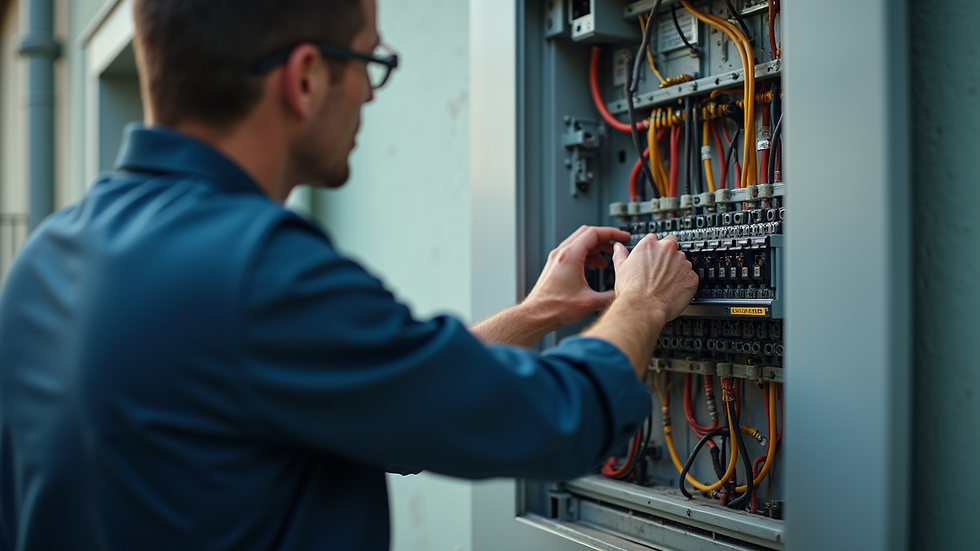
Now comes the core part - the actual installation. This step should always be handled by qualified electricians who understand commercial electrical systems and safety regulations.
The installation process generally follows these stages:
Mounting the fixtures securely to ceilings or walls.
Running electrical wiring from the power source to each fixture.
Connecting fixtures to the wiring using appropriate connectors and ensuring all connections are safe and compliant.
Installing control systems such as switches, dimmers, or sensors.
Testing each fixture to confirm it works correctly and provides the desired lighting level.
During installation, electricians will also check for any issues like flickering or uneven lighting and make adjustments as needed.
Step 5: Final Testing and Adjustments
After installation, it’s crucial to perform thorough testing. This ensures everything operates safely and efficiently.
Here’s what to check:
Verify all lights turn on and off properly.
Measure light levels to confirm they meet the design specifications.
Test control systems like timers or motion sensors.
Inspect wiring and fixtures for any signs of overheating or loose connections.
Adjust fixture angles or brightness if necessary to optimize lighting.
Once testing is complete, the space should be clean and ready for use. Proper documentation of the installation and any warranties should also be provided.
Why Professional Help Matters
While some might consider DIY lighting installation, commercial projects are complex and carry safety risks. Professional commercial light fitting services ensure:
Compliance with electrical codes and safety standards.
Use of high-quality materials and fixtures.
Efficient installation that minimises downtime.
Expert advice on energy-saving options and maintenance.
If you want your commercial lighting to be reliable and effective, working with experienced electricians is the best choice.
Keeping Your Lighting System in Top Shape
Installation is just the beginning. To keep your commercial lighting system performing well:
Schedule regular maintenance checks.
Replace bulbs or fixtures promptly when they fail.
Clean fixtures to maintain brightness.
Upgrade to newer, more efficient technology when possible.
Good maintenance extends the life of your lighting and keeps your space safe and welcoming.
If you’re ready to enhance your commercial space with professional commercial lighting installation, following these steps will set you on the right path. With careful planning, the right equipment, and expert installation, your lighting will shine bright for years to come.


Comments